![]() |
![]() |
|
Dates and Venue 22 July - 22 August, 2010 Mon at 8pm, Tues at 7:30pm, Wed – Sat at 8 pm, (Matinees Wed & Sat at 2pm) | Stanley Industrial Alliance Stage Director Michael Shamata Set Design Kevin McAllister Costume Design Nancy Bryant Lighting Design Gerald King Sound Design Noah Drew Stage Manager Caryn Fehr Reviewer John Jane |
||||||||||||||||||||||||||||||||||
|
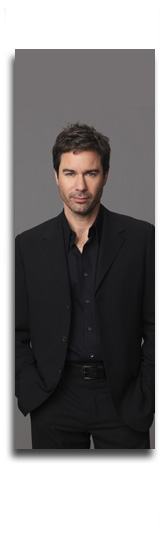
It might seem that David Mamet’s 1983 boiler-room drama appears to centre on the questionable dealings of a Chicago real estate office, but really, it brings into focus the broader issue of cutthroat capitalism gone awry. This mounting by the Arts Club Theatre Company has benefitted from a huge amount of buzz. It’s no doubt due in some measure to the casting of television sit-com star Eric McCormack in the role of Richard Roma, but hopefully, also because its underscored theme of corporate avarice has been given fresh relevance from recent events. The title refers to a shady Florida real estate development known as Glengarry Highlands and Glen Ross Farms. The story relates to the shilling of land parcels by four pathetically macho and streetwise salesmen and their marginally competent office manager whose sales techniques border on criminal. The forty-minute first act deals entirely with three separate conversations in (presumably) the same second-rate Chinese restaurant. The first of these is between veteran salesman Shelley Levene (Gerard Plunkett) and phlegmatic office manager John Williamson (Vincent Gale). Levene, who is in a long-running slump, tries to bait, bully, and finally bribe the manager to cough up some of the prime leads. On another table, Dave Moss (John Piper-Ferguson) and George Aaronow (Brian Markinson) are revelling in a bitch-fest about their employer over a few drinks. The discussion takes a cynical twist when Moss proposes stealing the Glengarry leads and offering them to the company’s main competitor. Aaronow initially refuses to get involved, but Moss coerces him by pointing out that he’s already an accomplice by just “talking about it.” Richard Roma is a consummate opportunist and the office’s most productive pitchman. When he sees the nebulous James Lingk (Bart Anderson) at an adjacent table he immediately identifies him as a potential mark. He launches into a heavily disguised spiel about a real estate deal being a business opportunity rather than a purchase. The second act action moves to the business premises of Mitch & Murray the morning after a robbery. The ransacked real estate office looks like it wouldn’t show much better on a normal day and a police detective (Daren Herbert) has already arrived and sets about aggressive questioning of the staff. Each character displays a totally different reaction to the situation depending on their disposition; ranging from Aaronow’s nervous agitation to Roma’s nonchalance. One of the best scenes is when Roma’s diffident client Lingk comes to the office to recant on the previous day’s dealings, Levene and Roma pair up to dupe him out of changing his mind. The all male cast give a uniformly excellent performance committing frank portrayals of a handful of men operating on the edge. The actors obviously enjoyed playing off each other’s strengths, handling Mamet's machismo dialogue with verve. Despite raised expectations for this show, McCormack and Plunkett certainly don’t disappoint in the main roles. Vincent Gale drew the short straw with the role of the rancorous Williamson, having to handle the least interesting role with the worst lines and Bart Anderson may be guilty of playing a nondescript character (Lingk) a little too well. As usual, the Arts Club production values are top-notch. Kevin McAllister’s sets and Nancy Bryant’s clothing accurately establish a mid-eighties ambience. Director Michael Shamata shepherds a mise-en-scene that is compact and compelling. This Arts Club Theatre Company mounting may well turn out to be its best attended ever – it certainly deserves to be. An Interview with Gerard Plunkett, actor and a member of the cast of the Arts Club Theatre presentation of Glengarry, Glen Ross Interviewer John Jane
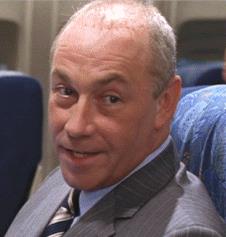
Of all the productions recently presented by the Arts Club Theatre, few have gotten the same buzz as Glengarry, Glen Ross. Ticket sales have been robust and with an extension to the run unlikely, some theatre-goers could be disappointed. Gerard Plunkett, who takes on the role of Shelley Levene, has been seen on many locally produced television shows as well as some memorable and not so memorable movies (Snakes on a Plane, anyone). When I talked with him by telephone during a rehearsal break, it was very evident that his first love is for the stage. He was born and raised in Dublin, Ireland and like many Dubliners is a natural story-teller. He goes so far as to credit his typical Irish upbringing to giving him an advantage in his chosen profession. Certainly, he has managed to keep busy in a field where so many other actors find it difficult to maintain employment. He told me that the ‘Glengarry’ project was initially conceived three years ago at an informal gathering of the same group of actors that will stepping be on to stage at the Stanley theatre later this week. Gerard has enjoyed rehearsals for Glengarry which has been an essential part of the creative process in staging David Mamet’s boiler-room drama. He is also delighted to be re-united and working with fellow actors he considers friends. I asked him if he had seen the 1992 film adaptation which featured Jack Lemmon in the ‘Shelley’ role and how it compared to the Arts Club mounting. “The play is much more hard-hitting and in-your-face than the movie, which was made for a broader audience” he replied quickly and added, “The Shelley Levene character was emotionalized for the film, whereas the play draws a deeper contradiction of the brotherhood and the fierce rivalry of the salesmen.” While he acknowledges that the film is excellent work, he dismisses the notion that it offers any inspiration to him. “In theatre, things often evolve in the moment. One might go at see the same mounting of a play three times and see three different versions even though the lines and sets are the same.” Gerard has a proclivity for portraying ‘outsiders’ similar to the luckless loser he plays in Glengarry. He mentioned that he would relish playing Shylock in The Merchant of Venice. Although, he does have fond memories of playing an ‘insider’ in his last Arts Club production, when he received a Jessie Richardson nomination for his work as Henry Higgins in My Fair Lady back in the Christmas holiday season of 2001. © 2010 John Jane |
||||||||||||||||||||||||||||||||||||

|
|
||||||||||||||||||||||||||||||||||||
|
|
||||||||||||||||||||||||||||||||||||