4
WHITESPACE
| WHAT'S NEW | |
| books | |
| concerts | |
| dance | |
| exhibits | |
| film | |
| opera | |
| theatre | |
| about us | |
| our reviewers | |
| archives | |
| links | |
| legal stuff | |
| home | |

 |
|
|
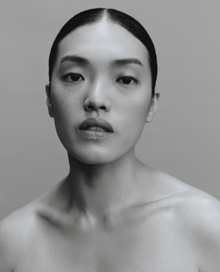
Interviews with CHENG I-han, Rehearsal Director & Dancer of Hung Dance; HUANG Li-chieh, Dancer with Hung Dance, former dancer of Cloud Gate & LAI Hung-chung, choreographer
Interviewer Ross Michael Pink
 |
|
|
CHENG I-han, Rehearsal Director & Dancer of Hung Dance
RMP: What was your early dance training
From age 4 to 15, I trained in children’s creative movement and
folk dance. At 15, I began Western dance training, such as ballet and
Martha Graham technique; Tai Chi Dao-Yin, and improvisation. From 20
to 22, I focused more on contact improvisation and contemporary dance.
These years shaped my first understanding of rhythm, dynamics, and body
lines.
RMP: How did you get involved in dance
When I was four, my mother worked across from a dance studio. Seeing
kids in pink tutus through the mirror made me want to start dance classes.
My mom simply wanted to develop my hobbies, but I would come home after
every class and practice repeatedly for her. Through the frustrations
and breakthroughs, I gradually realized how much joy and purity I found
in dancing, and that this was truly the path I wanted to follow.
RMP: What are your favorite dance roles
I especially enjoy roles that are mature or emotionally rich. In college,
I performed the Old Woman in Kurt Jooss’s The Green Table. That
experience helped me discover that my emotional nature could be expressed
through such characters. Whether portraying loneliness or struggle,
I deeply enjoy the process of release.
RMP: Audiences always ask, what is it like to be a professional
dancer
Being a dancer is both a blessing and a challenge. The blessing is being
able to transform subtle feelings in life into movement and share them
with the audience. The challenge is maintaining physical condition,
continuous training, facing both physical pain and emotional pressure,
and constantly pushing beyond my limits. But through these challenges,
I feel the depth of a dancer’s life expanding continuously.
RMP: What future dance roles would you like to perform
I don’t have specific roles I long for at the moment. What matters
most to me is that each performance leaves a lasting impression. That,
to me, is the greatest achievement.
RMP: What are the challenges of dance
The biggest challenge is maintaining physical and mental well-being
through years of training and performances. The body needs to stay in
its best condition, while the mind must not be consumed by pressure
or self-doubt. Keeping my own rhythm while juggling all that physical
and emotional pressure isn’t easy, but it matters the most. That’s
why, in my downtime, I practice yoga and meditation to stay aware of
my physical and emotional state at all times.
RMP: Describe the style and message of the Vancouver show
Performing BIRDY in Vancouver, we bring together contemporary movements
with traditional Peking opera props—the Lingzi (feather) and rattan
rods. For me, the work explores the tension between freedom and confinement,
and between the individual and the collective. I
don’t think the audience needs to “understand” a literal
story. Instead, I hope they can feel the flow of our breath and energy.
We sometimes soar, sometimes scatter, and each section invites the audience
to sense the connections among the dancers, whether harmonious or full
of struggle. As
you follow us through the journey of the piece, let your own body and
emotions respond to the energy we generate. Whatever you feel in that
moment is the message the work truly hopes to share.
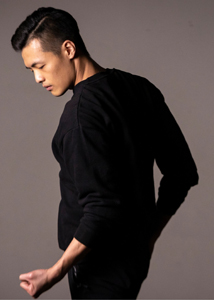
CHENG
I-han, Rehearsal Director & Dancer,
former dancer of Cloud Gate
RMP:
What was your early dance training
Like many dancers in Taiwan, my early training included ballet, modern
dance, and folkl dance. After joining Cloud Gate, I focused on martial
arts and Tai Chi Dao-Yin, and also explored gymnastics, capoeira, and
juggling. Together, these trainings have enriched my physical vocabulary
and given me a variety of movement experiences.
RMP:
How did you get involved in dance
When I was a child, my mom asked me which extracurricular class I wanted
to take, and I said I wanted to dance. And I’ve been dancing until
today.
RMP:
What are your favorite dance roles
Contemporary dance doesn’t always assign “roles.”
More often, we are encouraged to “be ourselves,” and I really
enjoy that.
Audiences always ask, what is it like to be a professional dancer. .nyone
who can turn what they love into a career is fortunate. I feel very
lucky to be a dancer!
RMP:
What future dance roles would you like to perform
I have no limitations. I welcome all choreography and all types of roles—even
outside dance.
RMP:
What are the challenges of dance
Different stages come with different challenges, and right now, it’s
probably age! I need to spend more effort on maintaining and caring
for my body.
RMP:
Describe the style and message of the Vancouver show
BIRDY is about searching for freedom, exploring direction,
and challenging boundaries.
I believe these themes resonate with many people. I hope audiences bring
their own life stories into the theatre and enter the world of BIRDY
with us.
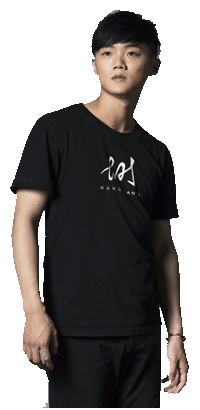 |
| Lai Hung-chung, choreographer Photo: Terry Lin |
LAI Hung-chung, choreographer
RMP: How did you
get involved in dance
I started with street dance together with my older brother. It felt
cool, free, and liberated me from the stiffness of classroom life.
RMP: Who were your early inspirations
I prefer not to answer this one.
RMP: What is the best part of Choreographing dance
Inspiration is only the first step. What interests me more is how those
ideas take shape with other artists in the rehearsal room and on stage.
Recently, I’ve become fascinated with understanding why certain
ideas succeed while others don’t. How to sense whether an idea
can truly stand on its own. The process feels almost like an investigative
puzzle, full of paradoxes and unexpected turns. I believe every idea
has a place where it can grow—on the right dancer, in the right
work, at the right moment. It’s like planting different seeds
in different seasons. You also have to look at the “soil”:
what it has held before, what nutrients remain, and how past experiences
shape the ground you’re working with. For
me, choreography is about finding the conditions in which these ideas
can take root and become alive, even amid uncertainty.
RMP:
What are the challenges of choreography
Inspiration needs the right conditions, but the same environment soon
loses its spark. So I look for different triggers—new places,
new stimuli. It’s a mix of intuition and experience. You have
to move toward inspiration for it to appear. Choreography starts the
moment you begin that search.
RMP:
Describe the performance in Vancouver and message of the dance
One key element of the work is the Lingzi, the pheasant feathers used
in Peking opera. On the opera stage, they signify rank and hierarchy,
but in BIRDY I wanted to break away from that formality. Here, the feathers
become an extension of the spine, amplifying the vibrations of the body.
As the energy travels outward, it grows stronger. What I hope the audience
can feel is how invisible forces affect one another—how movement,
tension, and stillness are all interconnected. Only when balance is
found can the trembling finally come to rest.
RMP:
How long has the company been performing
Since 2017. Next year, we will premiere “Sadly Cute” in
Taiwan, a work combining temple culture, lion dance, and firecrackers
to explore the idea of “ripple” and how daily life and war
influence and spread.
RMP: What
are your artistic highlights as a choreographer
Different periods in my career have brought different milestones. In
the early years, I was drawn to large group choreography—playing
with shifting formations, rhythmic layers, and the architecture of collective
movement.
Later, I began focusing on integrating traditional opera, Tai Chi, and
street dance into contemporary vocabulary, expanding the range of how
the body could speak. After that, my attention shifted toward storytelling,
toward finding ways to offer audiences an entry point for emotional
connection. Most
recently, I’ve been exploring the tension between rationality
and emotion, and how pushing movement to its limits can awaken more
subtle, instinctive responses.
© 2025 Ross Michael Pink