|
|
|
 |
When & Where June 24 - September 18, 2026; evenings 7:30pm, matinees Wed, Sat & Sun 2pm | BMO Mainstage, Vanier Park Director Stephen Drover Costume Designer Alaia Harmer Set Designer Amir Ofek Composer and Sound Designer Mary Jane Coomber Lighting Designer Jeff Harrison Fight Director Jonathan Hawley Purvis Intimacy Director Lisa Goebel Stage Manager Joanne P.B.Smith Cast: Fleance Rachel Angco Lady Macduff/Porter Steffanie Davis Lady Macbeth Tess Degenstein Banquo/Seyton Sebastian Kroon Donalbain Tai Leathem Ross Melissa Oie Ducan Anthony Santiago Macbeth Munish Sharma Malcolm Sara Vickruck Lennox Ashley Wright Figures, Soldiers, Murderers, Citizens The Company Reviewer Shakeela Begum | |||||||||||||||||||||||||||||||||||||||
|
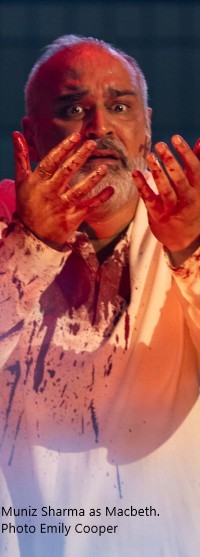
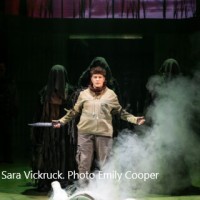
"Macbeth scares me a bit. And I think that means it's working." These opening words from director Stephen Drover's notes stayed with me throughout the evening. Shakespeare's darkest play has been reimagined as a post-urban dystopia where survival appears precarious and fear seems woven into the fabric of everyday life. Gone are the witches I expected. In their place are three unsettling figures whose distorted appearance and ominous presence feel as though they have emerged from Game of Thrones. The production is visually striking. Amir Ofek's set presents two very different worlds. Above ground lies a harsh and toxic landscape marked by violence, scarcity, and struggle. Beneath it sits a surprisingly sterile underground bunker inhabited by Macbeth and Lady Macbeth. The contrast is impossible to miss. Outside, chaos. Inside, order. Yet as the story unfolds, it becomes increasingly clear that the inner landscape may be far more dangerous than the outer one. Munish Sharma's Macbeth begins as a celebrated warrior and apparent saviour, only to descend gradually into paranoia, ambition, and fear. Tess Degenstein's Lady Macbeth brings both intensity and fragility to the role, revealing cracks long before her famous unravelling. The cast commits fully to Drover's vision. Sebastian Kroon's Banquo is compelling, Jacob Leonard's Macduff carries genuine emotional weight, and Steffanie Davis brings both humour and humanity to multiple roles. Throughout the production, the ensemble sustains a world that feels both distant and uncomfortably familiar. The acting is consistently strong, although there were moments when the dialogue seemed to be competing with Mary Jane Coomber's powerful soundscape. At times I found myself straining to catch Shakespeare's words as music and effects filled the theatre. The atmosphere was undeniable; occasionally I wished the dialogue had been given a little more room to breathe. What stayed with me, however, was not the bloodshed or the dystopian setting. It was the question that seems to sit beneath the entire production: What are we most afraid of? In his notes, Drover writes that Macbeth does not offer a lesson or cure us of fear, but that it can "open a door, let us walk beside our fears, and give us permission to confront them". Four hundred years after it was written, Macbeth continues to do exactly that. Perhaps that is why it still unsettles us. © 2026 Shakeela Begum |
||||||||||||||||||||||||||||||||||||||||||
|
|
||||||||||||||||||||||||||||||||||||||||||
|
|
||||||||||||||||||||||||||||||||||||||||||